 Reviews


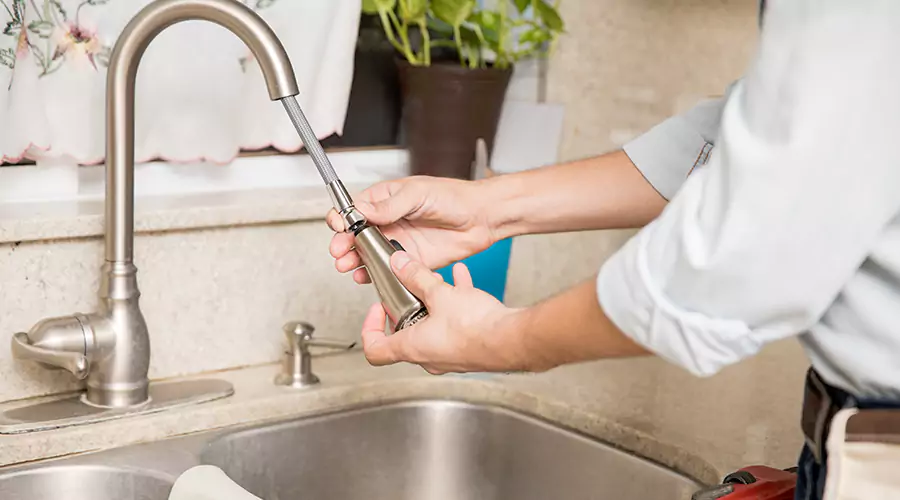
A dripping faucet wastes up to 3,000 gallons of water per year. That's money down the drain, literally. The good news is that most leaky faucet repairs are simple DIY plumbing jobs you can finish in under an hour with $5 to $30 in parts.
This guide covers how to fix a leaking faucet for every common type found in homes, whether it's a dripping kitchen faucet, a bathroom faucet dripping when off, or a shower faucet leaking at the base.
What Causes a Faucet to Leak?
Most people assume a leaking faucet means something is seriously wrong. In reality, the cause is almost always something small and inexpensive. Before you grab a wrench, our faucet repair experts can help you understand what's actually causing the problem and how to fix it efficiently.
Worn Rubber Washer or O-Ring
This is the number one reason for a faucet dripping when off. Every time you use the faucet, the washer presses against a metal valve seat and slowly wears down. Eventually it can no longer form a watertight seal.
Damaged Cartridge
Modern single-handle faucets use a cartridge to control water flow. When it wears out, you get a slow steady drip that won't stop no matter how hard you crank the handle.
Corroded Valve Seat
Sediment and mineral deposits build up where the spout meets the faucet body, causing leaking around the spout area over time.
Loose Packing Nut
Common in older compression-style faucets. When the nut loosens, water seeps out around the handle rather than from the spout.
High Water Pressure
If your faucet only drips at certain times of day, especially at night, abnormally high home water pressure may be the real issue. This is connected to how to fix low water pressure problems and may require a pressure-reducing valve.
Step 1: Identify Your Faucet Type
This is the most important step. The dripping faucet repair process is completely different depending on what kind of faucet you have.
Compression Faucet
Two separate handles you tighten to stop water flow. The oldest design, most common in homes built before the 1970s. Most prone to dripping because the rubber washer wears out with every single use.
Ball Faucet
One handle that rotates over a dome-shaped cap. Very common in kitchens. Has the most moving parts including springs, inlet seals, and O-rings, which means more things that can wear out over time.
Cartridge Faucet
Single or double handle with a smooth up-and-down motion. Found in most modern American bathrooms. The easiest fix on this list. Pull out one cartridge and drop in a new one.
Ceramic Disc Faucet
A single wide handle on a cylindrical body. High-end and very durable. Rarely leaks, and when it does, mineral buildup is usually the cause rather than a broken part.
Not sure which type you have? Look up your brand name, Moen, Delta, Kohler, or American Standard, and find the model number on the manufacturer's website.
Step 2: Gather Your Tools and Materials
You don't need much for this DIY plumbing repair.
For tools, grab an adjustable wrench, Phillips and flathead screwdrivers, an Allen wrench set, needle-nose pliers, a utility knife, and a bucket or old towel.
For materials, pick up a replacement washer, O-ring, or cartridge that matches your specific faucet. A complete faucet repair kit for ball or cartridge faucets costs $10 to $20 at Home Depot or Lowe's and includes everything you need. Also grab some silicone-based plumber's grease and white vinegar for mineral buildup.
Always buy the brand-specific kit when possible. A Moen cartridge won't fit a Delta faucet.
Step 3: Turn Off the Water Supply
This step is non-negotiable.
Look under the sink for two oval shut-off valves, one for hot and one for cold. Turn both clockwise until they stop completely. If there are no under-sink valves, locate your home's main water shut-off valve and turn it off instead.
Open the faucet handle and let any remaining water drain out. This releases built-up pressure in the line. Then plug the drain so small screws and springs don't disappear on you.
Test that the water is fully off before touching anything else. Turn the handle and if water still flows, your shut-off valve is also failing and needs its own separate repair first.
Step 4: Disassemble the Faucet and Replace the Worn Part
Take photos with your phone at every stage. The order parts come out is the exact reverse of how they go back in.
Compression Faucet Repair
Pry off the decorative cap on the handle, unscrew the handle screw, and remove the handle. Use a wrench to unscrew the packing nut, then pull out the stem. At the bottom you'll find a rubber washer held by a brass screw. Replace it with an identical washer. This is the classic how to replace a faucet washer job, simple, cheap, and very satisfying.
Ball Faucet Repair
Remove the handle by loosening the set screw under the decorative collar. Unscrew the cap and collar, then lift out the ball, cam, and cam washer. Use needle-nose pliers to pull out the inlet seals and springs. Cut off old O-rings with a utility knife and roll on new ones coated in plumber's grease. Replace the springs, seats, and ball using your repair kit.
Cartridge Faucet Repair
Remove the handle, then pull off the retaining clip holding the cartridge. Pull the cartridge straight up and out, noting its orientation. Bring the old cartridge to the hardware store for an exact match, then insert the new cartridge in the same orientation and reassemble the handle. That's genuinely it.
Ceramic Disc Faucet Fix
Remove the handle and unscrew the disc cylinder. Take out the ceramic discs and inspect them for cracks. If they look undamaged, soak them in white vinegar for 30 minutes to dissolve mineral deposits. This fixes most ceramic disc leaks. If they're cracked, replace the entire cylinder.
Apply silicone plumber's grease to all new rubber parts before installing them. This extends the life of the repair significantly.
Step 5: Reassemble and Test
Put everything back together in reverse order. Hand-tighten all connections first, then snug with a wrench. Don't overtighten or you risk cracking the faucet body.
Slowly turn the water supply back on and run the faucet for 30 seconds to flush out any debris. Check for drips at the spout, the base, and around the handle. Turn the handle on and off several times to confirm the repair held.
If you still see water dripping from the faucet after replacing the washer or cartridge, the valve seat inside the faucet body is likely corroded. At that point it's time to call a plumber. A corroded seat needs regrinding with a specialized tool most homeowners don't have.
How Much Does Faucet Repair Cost?
One of the most searched questions alongside how to fix a dripping faucet is what the whole thing actually costs.
DIY faucet repair runs $5 to $30 in parts. A rubber washer costs under $2. A replacement cartridge runs $10 to $25. A ball faucet kit is around $15 to $20.
If you hire a plumber, the plumber cost per hour averages $75 to $150 across the US. A simple faucet repair usually takes 30 to 60 minutes, so expect $100 to $200 including labor.
If your faucet is older than 15 to 20 years and parts are hard to find, full replacement may be smarter. A new mid-range faucet costs $50 to $200, plus plumbing repair cost for installation.
Does homeowners insurance cover plumbing leaks? Generally no. Standard policies cover sudden water damage like a burst pipe but not gradual wear-and-tear faucet leaks. Always check your individual policy to be sure.
When to Call a Plumber Instead
Knowing your limits is part of being a smart homeowner. Search for an emergency plumber near me rather than pushing forward if any of these apply.
The leak is coming from inside the wall, at a pipe connection, or under the floor. This could signal how to fix a leaking pipe issues far more serious than a faucet. You've replaced the washer or cartridge and the faucet is still dripping. The shut-off valve under the sink is also leaking or won't fully close. Parts for your faucet are discontinued or unavailable. You notice water damage, mold, or soft drywall near the faucet. This is a plumbing emergency that needs immediate professional attention.
A professional faucet repair service costs far less than the water damage a failed DIY repair can cause over time.
How to Prevent Faucet Leaks in the Future?
Don't overtighten faucets. Turn the handle just until water stops. Cranking it hard crushes the washer faster and is one of the leading causes of early wear.
Check your home water pressure. Normal water pressure is 40 to 80 PSI. Anything higher accelerates wear on all faucet components. A plumber can install a pressure-reducing valve for about $200 to $300.
Install a water softener if you have hard water. Mineral deposits corrode valve seats and degrade O-rings much faster than soft water does.
Watch for early warning signs. A faucet that squeaks when you turn it, a handle that requires more force than usual, or occasional dripping after shutoff are all signs of a washer on its way out. Catching it early means a $2 fix instead of a $150 service call.
Summary
A leaking faucet is one of the most common and most fixable plumbing problems in any American home. Identify your faucet type, shut off the water, replace the worn washer or cartridge, and test. That's the whole job for most homeowners, done in under an hour for under $30.
If the drip continues after the repair, or the problem turns out to involve the pipes themselves, calling a licensed plumber is always the smarter and safer move. A quick professional visit costs far less than ignoring a leak until it becomes a water damage claim.